咨询热线:021-62592368

30多年金属礼品生产厂家已为10000+家国际知名品牌定制加工


Definition of Heat Transfer Printing:
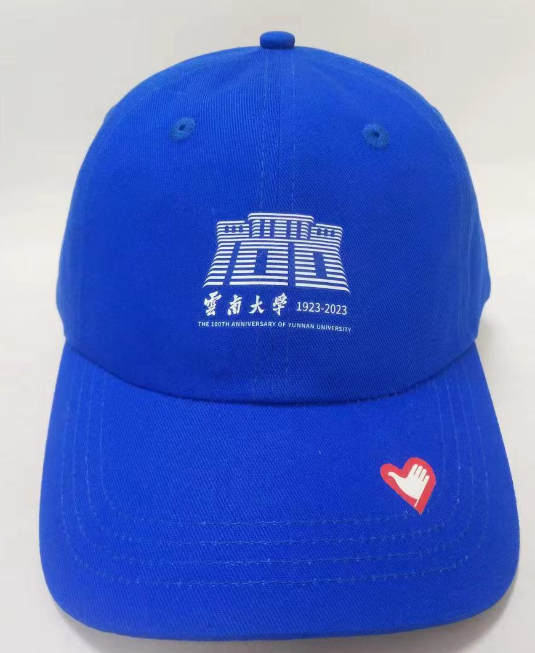
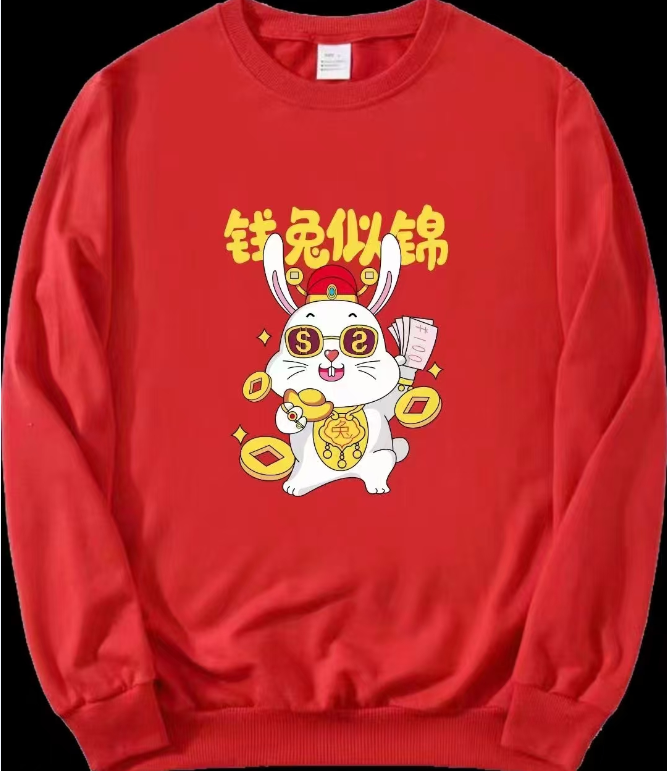
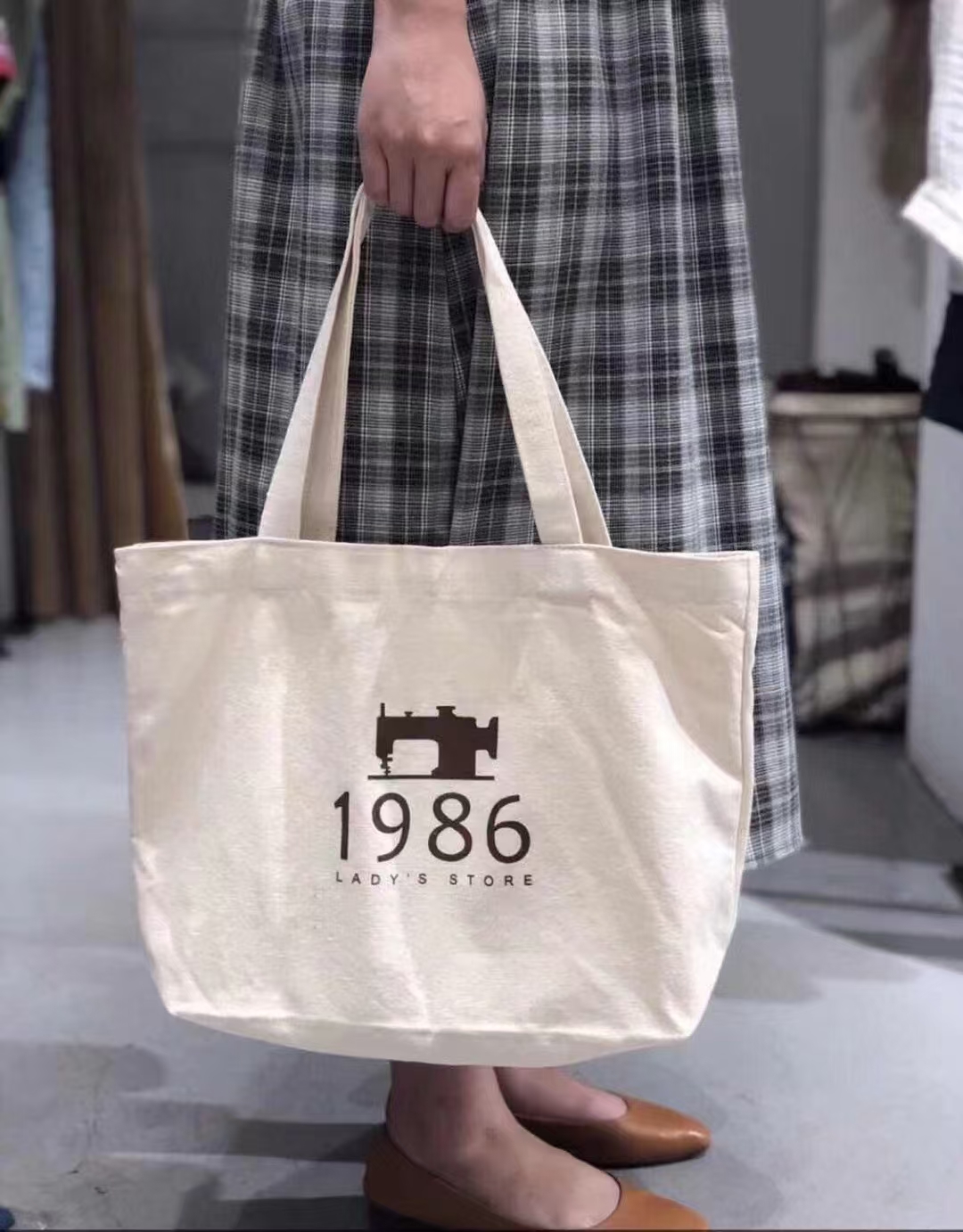
Heat transfer printing is a process that involves placing a special transfer paper onto the fabric to be printed. Using a heat press machine, the paper is bonded with the fabric, allowing the design to become fully integrated into the material. This technique requires consumables such as transfer paper, transfer film, and a heat press machine.
Heat Transfer Printing on Different Fabrics:
Difference Between Heat Transfer Printing and Thermal Transfer Printing
Heat transfer printing is a subset of thermal transfer printing. It typically uses regular ink or pigment ink to print designs onto transfer paper. Through a heat transfer machine, the adhesive coating melts under high temperature and transfers the design onto the fabric along with the pattern. Heat transfer printing is commonly used on cotton fabrics, but it tends to result in poorer breathability and hand feel.
Thermal transfer printing, on the other hand, includes both heat transfer printing and dye sublimation printing. Dye sublimation uses special dyes with sublimation properties. When heated, the dyes transform into a gaseous state and penetrate the surface of the substrate. This process is ideal for fabrics with low cotton content and synthetic materials such as polyester.
In terms of application, heat transfer printing is mainly used on cotton fabrics, while thermal transfer printing has a much wider range of applications—including not only textiles but also heat-resistant materials such as ceramics, glass, and metal.
Customer Project – July 2024
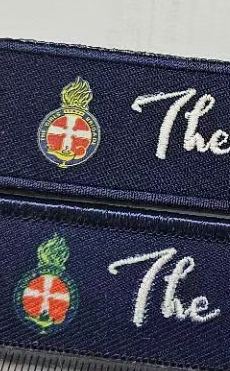
Product: Custom Double-Sided Embroidered Keychains with Heat Transfer Logo
Order Quantity: 500 sets
Specifications:
Material: Double-sided embroidered keychain
Size: 120mm (L) x 25mm (W)
Color: Navy blue twill base with single-color white embroidery
Left Side Logo: Heat transfer application
A perfect blend of classic embroidery and modern heat transfer technology for a premium branded accessory.
Accessories: Large Lobster Clasp + D-Ring
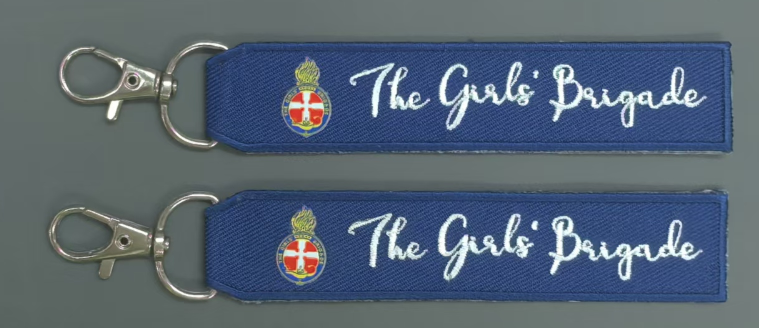
During production, we found that regular heat transfer printing could not clearly print the logo on the twill base. Therefore, we switched to the heat transfer film process instead.
As can be clearly seen from the image below, on the same material, the heat transfer label offers better color vibrancy and clarity compared to direct thermal transfer printing.